
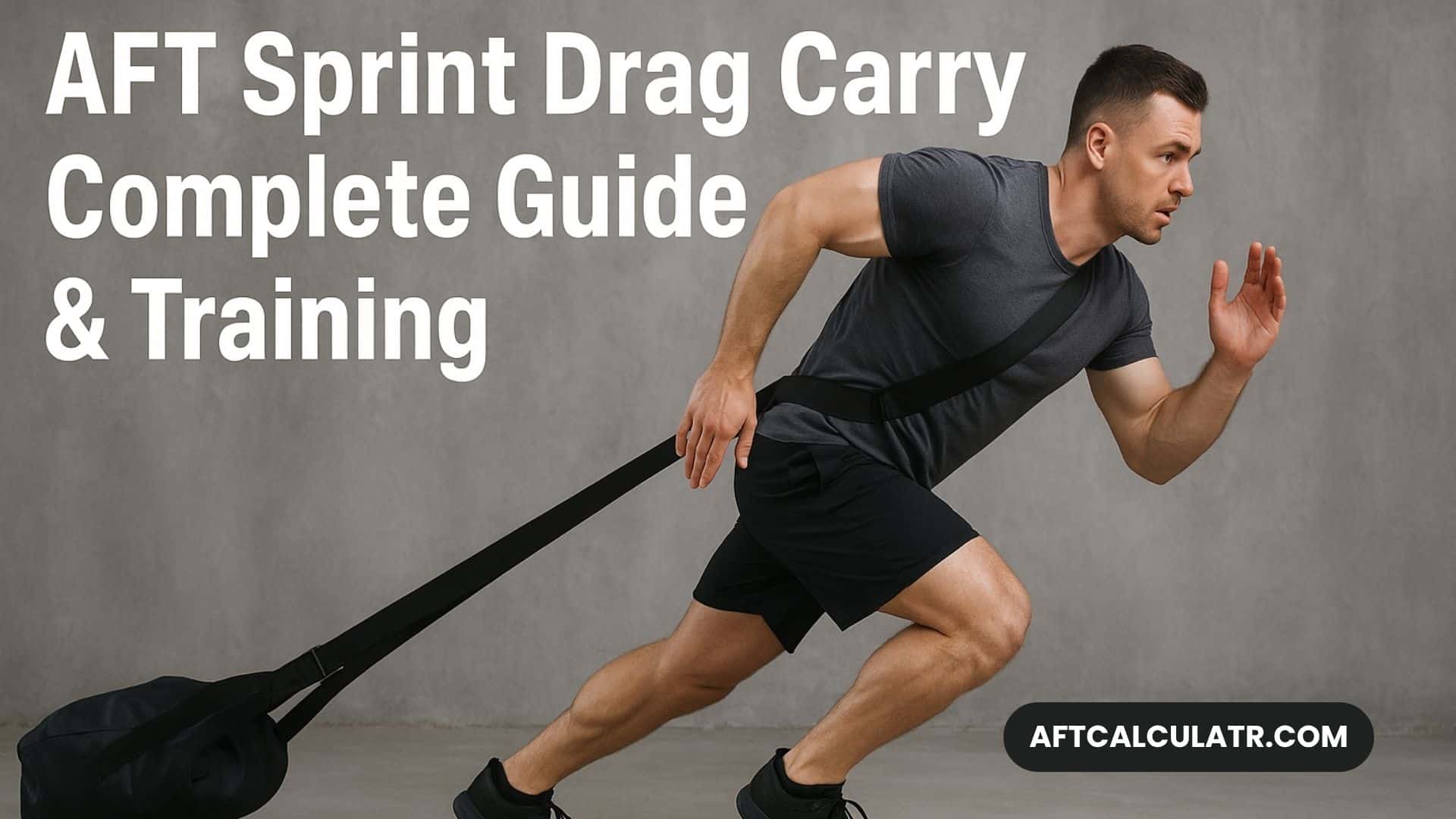
If, like countless other men and women, you want to join the military, then you need to pass the Army Sprint Drag Carry in USA. It is the major event in the Army Combat Fitness Test. It has been developed to assess a soldier’s overall physical fitness. This event is an important part of the training of soldiers for actual problems of combat.
In reality, soldiers are required to drag casualties, carry heavy loads, and be quick to respond to threats. The Army’s SDC attempts to simulate these demands. It forces soldiers to perform under high strain. It is an ultimate challenge to physical endurance and mental resilience. The test recreates actual combat conditions, such as carrying a wounded comrade or carrying ammunition.
Everything You Need to Know about AFT Sprint Drag Carry
The Army Combat Fitness Testis the official test for all soldiers. It started on June 1, 2026, and is used to check if soldiers are ready for physical challenges.
Key Changes in the Testing Method
The ACFT is being replaced with the Army Fitness Test (AFT). Now, the test has age-normed and sex-neutral standards for specialties of combat. This ensures that the test is fair to all.
The goals of the ACFT were to:
- Training of soldiers for war.
- Reduce injuries.
- Improve physical strength and stamina.
Components of the Sprint-Drag-Carry (SDC)
The Sprint-Drag-Carry event has five major components. Each part checks a different area of physical fitness, including speed, strength, agility, grip control, endurance, and coordination. By understanding each component clearly, you can prepare better for the test and know what to expect on the field.
Every stage becomes more challenging because your body is already tired from the previous movement. That is why the SDC is not only a speed test. It also measures how well you can perform under pressure while maintaining control, balance, and proper movement.
1. Sprint
As the name suggests, the Sprint-Drag-Carry starts with a sprint. This first part is all about explosive speed, quick reaction, and cardiovascular fitness.
In this section, you run a 25-meter sprint drag carry distance, touch the line with your foot and hand, then turn around and run back to the starting line. This short burst of speed raises your heart rate quickly and sets the pace for the rest of the event.
A strong start is important, but you should avoid using all your energy in the first sprint because the harder sections are still ahead.
2. Sled Drag
The sled drag is one of the toughest parts of the Sprint-Drag-Carry. It is designed to test lower body strength, pulling power, core stability, and stamina. This movement can also simulate dragging a casualty or moving heavy equipment during a real physical task.
In this part, you drag a 90-pound sled for 25 meters, cross the line, turn around, and pull it back to the starting point. The sled drag can quickly fatigue your legs, hips, back, and grip, so controlled movement is very important.
3. Lateral Movement
The lateral movement section checks your agility, balance, coordination, and side-to-side control.
In this part, you move sideways for 25 meters, touch the line with your foot and hand, then return to the starting point without crossing your feet. This movement may look simple, but it can become difficult after the sprint and sled drag because your legs are already tired.
Good footwork matters here. Keep your body low, stay controlled, and avoid unnecessary steps that can slow you down.
4. Kettlebell Carry
The kettlebell carry tests your grip strength, shoulder stability, posture, and walking control under load.
You carry two 40-pound kettlebells for 25 meters, touch the line with your foot, turn around, and return to the start line. The goal is to move fast while keeping the kettlebells under control.
Do not let the kettlebells swing too much or drop from your hands, because that can waste valuable time. A strong grip, steady breathing, and upright posture can help you complete this section more efficiently.
5. Final Sprint
The final sprint is the last part of the Sprint-Drag-Carry, and it tests your speed, endurance, and mental toughness after completing all previous components.
In this section, you sprint 25 meters, touch the line with your foot and hand, and run back to the starting point. Since your legs and lungs are already tired, this final sprint can feel much harder than the first one.
The key is to push hard while maintaining control. A strong finish can improve your overall Sprint-Drag-Carry time and help increase your score.
Time and Scoring for the Sprint Drag Carry
The Sprint Drag Carry isn’t just about finishing the test components. It’s about doing it efficiently and with fast implementation. The scoring system is based on speed and endurance. So let us determine the conditioning mechanism.
Scoring System
The following are the Army AFT sprint drag carry standards.
- Complete in 3 minutes = 60 points
- Complete in 2:30 minutes = 65 points
- Complete in 2:10 minutes = 70 points
- Max time (1:33) = 100 points
You can also check out the detailed AFT Calculator to calculate the marks that you may acquire in your test based on your physical conditions.
Why the Sprint Drag Carry Matters
The Sprint Drag Carry (SDC) is not any other fitness test. It is designed to simulate conditions of actual combat duty or a situation.
Real World Application
This event is as close as possible to what you should be encountering in the field of duty. For instance, the need for fighting positions to be constructed, casualties to be taken, and firing pits. In a real situation, soldiers must be able to run fast and carry heavy loads.
They also need to be able to stay strong and agile in the process under pressure. Intended to provide such challenges, the SDC will make sure that soldiers are both mentally and physically equipped, as to what they will face on the battlefield.
Physical Readiness
The SDC is a test of all endurance, strength, and speed. It puts the soldiers to their limits and tests them to be great despite being tired. It also tests lactate tolerance, and this is a critical element in maintaining performance during maximum physical exertion. The more you can do to deal with the fatigue and get through the pain, the better you are prepared for the high-stress situations in combat.
In short, the Sprint-Drag-Carry is a critical component of the ACFT and ensures that soldiers only reach their full potential in tackling the greatest physical tasks, at the times that matter.
Training for the Sprint Drag Carry
The technique of crushing the Sprint Drag Carry requires not only hard training, but also smart training. This is how to be ready for each part and improve the performance.
Pacing
The key to a strong performance in the SDC is a constant pace. Don’t go all out at the start. It is tempting, and sooner or later, by being too fast at the start, you will obliterate yourself. Begin leisurely to save strength in the drag with the sled, kettlebell carrying, and the last sprint. A constant flow has seen you emerge with sufficient power to see the end.
| Fitness Factor | Relevance in SDC | Training Tips |
| Cardio | Needed for the sprint and kettlebell carry | Run, cycle, swim to build heart and lung endurance. |
| Strength | Required for sled drag and kettlebell carry (legs & core) | Leg presses, squats, deadlifts, planks, and Russian twists. |
| Endurance | Key for sustaining effort across 225 meters | Interval training, long-distance runs to boost stamina. |
| Speed | Essential for the sprint and the final sprint | Sprint intervals, hill sprints, and stadium stairs for power. |
Tips and Techniques for Success in SDC
| Event | Tip | Why It Helps | How to Do It |
| Sled Drag | Use full-body strength | Saves energy and pulls better | Pull with your legs and core, not just arms |
| Lean back slightly | Gives more power | Keep your back straight and lean back | |
| Lateral Movement | Stay low | Helps you move faster and stay balanced | Bend knees, don’t bounce |
| Kettlebell Carry | Grip tightly | Keeps control and saves energy | Hold kettlebells steady and tight |
| Stand tall | Reduces back strain | Keep your back straight | |
| Sprint | Focus on form | Increases speed and helps finish strong | Pump your arms and run fast |
Common Mistakes and How to Avoid Them
Avoid these common mistakes to ensure a smooth and successful Sprint Drag Carry performance:
| Mistake | How to Avoid It |
| Failing to touch the line during sprints, laterals, or kettlebell carry | Always ensure you touch the line with your foot and hand. |
| Not completing the sled drag properly | Make sure the entire sled crosses the 25-meter line before you turn. |
| Crossing feet during laterals | Keep your feet apart and don’t let them cross. Maintain a smooth and controlled movement. |
| Jerking the sled | Use a steady pull, engage your legs, and keep your body posture aligned. |
| Dropping kettlebells | Grip tightly and maintain control. If you drop them, pick them up quickly without wasting time. |
| Improper running posture while dragging the sled | Keep your body straight and focus on using your legs to pull, not your arms. |
Preparing for Other ACFT Events
While the Sprint-Drag-Carry is a pivotal event in the ACFT you’re also going to want to pay attention to the Plank and 2-Mile Run in order to be fully prepared. Below is the way to prepare the following two significant elements:
Plank (PLK)
The Plank places a challenge on the core calmness and the balance. To excel in it
- Attend to strengthen muscles.
- Add exercises to your routine, such as planks, leg raises and side bridges.
- Try to keep good posture, keep your body tight.
2-Mile Run (2MR)
Your 2-Mile Run efficiency tests your aerobic conditioning and your capability to maintain a constant speed over a further distance. To improve:
- Stamina: Endurance is enhanced with increased endurance training through more extended, slower runs.
- Add tempo runs and interval training in order to gain more pace and time to recover.
- Time-test on how to pace practice, such that you do not exhaust yourself during the run to the finish.
Training for the 2-Mile Run
| Training Focus | Goal | How to Do It |
| Regular Running | Build cardiovascular fitness and endurance | Run 4-7 days per week |
| Tempo Runs | Improve lactate tolerance and pace control | Run at or near goal race pace for 20-30 min |
| Long Runs | Build endurance and stamina | Gradually increase distance, alternating easy and fast runs |
| Speed Work | Improve speed and power | Include intervals, hill reps, and VO2 max workouts |
Gold Standard for the AFT
The ACFT scoring system is set up to make sure that soldiers are as physically prepared to handle their jobs. The gold standard for the various categories would be as follows:
- Combat Jobs: Soldiers in combat positions should have a goal of 70 points or more for each event. Combat jobs have greater physical demands; therefore, a higher standard is set to ensure the soldiers are fit to handle the challenges of the battlefield.
- Non-Combat Jobs: For soldiers in non-combat jobs, the minimum score to pass each event is 60 points. These jobs also involve fitness through physical ability, but have a little less standard than that of combat jobs.
- Perfect Score: The perfect score for the ACFT is 600 points. To reach this score, we know that you have excelled in all the events, bringing forth the best fitness and preparedness.
Implementation of the ACFT (Transition to AFT)
The ACFT will officially become the Army Fitness Test (AFT), and the key dates to note the changes are to ensure readiness in all branches of the military:
- June 1, 2025: The ACFT is made a board-wide test to all soldiers instead of testing them on physical fitness.
- January 1, 2026: New combat role standards will be instituted for active duty soldiers, in which higher fitness requirements will be placed on soldiers in combat specialties.
- June 1, 2026: New standards that will match the active-duty military will be applied to the Reserve and National Guard troops.
Wrapping Up
The Sprint Drag Carry is a vital part of the AFT, which tests strength, endurance, and agility. Cardiovascular fitness and pacing are important in the SDC and also in the 2-mile run. Consistent training and a good mental approach are important for success to the highest standards. Stay focused, pace yourself, and train regularly if you want to pass the AFT.